For Jung Park, officiating volleyball was never part of a grand plan. It started with a simple desire to be prepared.
Park was first introduced to volleyball through a church club team, where he experienced both 9-man volleyball and traditional 6-on-6 indoor competition. His passion for the sport continued at the collegiate level, where he played club volleyball at the University of Connecticut before competing for several years in USAV AA/A competition.
It was at UConn, however, where Park’s path toward becoming an Official truly began.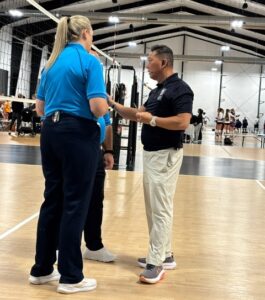
In 1994, Park was hired as the director of intramurals at UConn, a position that required him to teach student referees how to officiate avariety of sports. Wanting to make sure he could effectively teach the officials he was responsible for, Park decided he needed to learn the rules and mechanics himself.
“I thought I better know what I am talking about if I’m going to teach others,” Park said.
That mindset led him to become certified in several major sports, including basketball, soccer, softball, and, of course, volleyball. He earned his first officiating certification in 1996, beginning what has now become nearly three decades as a volleyball official.
A Career Built Around the Volleyball Community
Over the years, officiating has taken Park far beyond the gym where his journey began. One of the aspects he values most is the community he has found through officiating.
“The people. I have been fortunate enough to have met lifelong best friends through the game of volleyball,” Park said. “Officiating community is truly a unique group.”
For Park, the relationships built through officiating have been just as meaningful as the matches themselves. He describes the officiating community as a group of people who are willing to support one another and credits the sport with introducing him to some of the kindest people he has met.
Officiating has also provided Park with opportunities to represent the United States on an international stage and travel around the world.
One of his most memorable experiences came in September 2011, when he worked his first FIVB international match at the NORCECA Senior Men’s Continental Championship in Puerto Rico. Park served as R1 for a match between Canada and Cuba, two teams that were ranked among the world’s top 10 at the time as they prepared for the 2012 London Olympics.
The experience was a reminder of just how far his officiating journey had taken him.
“I remember thinking, ‘Wow! This is exactly why I worked so hard to be in this position. This is so cool and fun!’” Park recalled.
Another favorite memory came during the World University Games in China, where Park traveled with his longtime friend and fellow international referee, Bill Thornburgh. With their schedules allowing them to explore between matches, the two were able to experience the country together while doing what they loved.
For Park, those experiences are part of what makes officiating so rewarding.
A Family Affair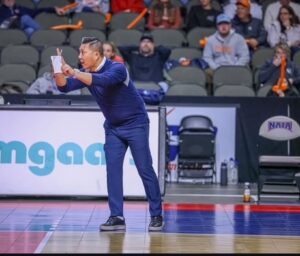
Volleyball also plays a significant role in Park’s family life. He and his wife coach together at the University of the Cumberlands, an NAIA program in Kentucky. They are entering their sixth year working together and have enjoyed helping the program compete on the national stage.
Park jokes that his wife is the coach in charge while he has a somewhat different role.
“She is the boss lady and I’m the designated yeller,” Park joked. “She does most of the coaching. I just run around and yell loudly at times.”
His wife has also become an important source of support for Park’s officiating career. Because she is deeply involved in the volleyball community, she understands the demands of a schedule that often leaves little room for an offseason.
Between coaching and officiating, Park stays busy year-round, but he wouldn’t necessarily have it any other way. One thing he does make time for is enjoying the sunshine whenever he can, even if that means soaking up some rays in a parking lot between commitments.
Growing the Collegiate Club Volleyball Community
Park’s impact on volleyball extends beyond officiating. He has also spent more than two decades creating opportunities for athletes to continue playing after their junior volleyball careers end.
In 1997, Park started the women’s club volleyball team at UConn and served as its head coach through 2020. Two years later, he founded the Northeast Women’s Volleyball Club League with a simple goal: create more opportunities for college athletes who loved the game to keep playing.
What began with eight teams in 1999 has grown into a league serving 109 collegiate women’s club teams across 10 states. Park currently serves as the league’s commissioner and has watched the collegiate club volleyball community grow for more than 25 years.
Many athletes who compete in JVA programs eventually find their way into the league once they reach college, creating a natural continuation of their volleyball careers.
“It all started with simple, ‘Hey, let’s figure out how to provide more opportunities in college for all these junior players that just love playing volleyball,’” Park said.
For Park, that mission has remained consistent: keep athletes connected to the sport and create opportunities for them to continue competing long after their junior volleyball careers.
Giving Back to the Next Generation of Officials
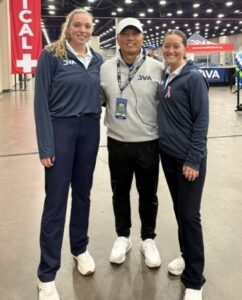 Park has also brought his experience to JVA events, where he has enjoyed working alongside the organization and its staff. He appreciates the environment at JVA events and sees value in initiatives designed to recognize and support officials.
He was particularly enthusiastic about the JVA Officials Reward Program, which provides additional incentives for officials working JVA events.
“JVA was the first organization to offer the reward program of any kind,” Park said. “I think it’s awesome.”
With more opportunities available for officials than ever before, Park believes programs like these can help make officiating even more appealing.
But his biggest message to the junior volleyball community goes beyond rewards.
Why More Volleyball People Should Try Officiating
Park knows firsthand that officiating can be challenging. It requires knowledge, concentration, confidence and the ability to make decisions in real time while managing the dynamics of a competitive match.
Still, he believes more people involved in volleyball should experience it for themselves.
“Officiating is tough and it certainly is not for everyone,” Park said. “But, I’d encourage everyone—athletes, coaches, parents, etc.—who are involved in the junior volleyball community to give it a try.”
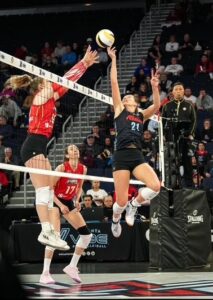
His suggestion is simple: If everyone involved in junior volleyball worked just a couple of days each season, the entire volleyball communitywould benefit from having more people who understand the game from an Official’s perspective.
For college students in particular, Park sees officiating as an opportunity to stay connected to the sport while earning money and maintaining a flexible schedule.
After nearly 30 years as an official, Park has experienced volleyball from nearly every angle—as a player, Coach, Official, International Referee and member of the broader volleyball community. His journey demonstrates that officiating can become much more than simply calling the lines or making a judgment on a play.
It can create friendships, open doors to international opportunities, strengthen a person’s understanding of the game and provide another meaningful way to remain connected to volleyball.
For Park, a career that began with a simple question—How can I teach others if I don’t know the game myself?—has turned into a lifelong journey that continues to take him around the world and back onto the court, whistle in hand.
JVA recognizes and rewards Officials through the Officials’ Reward Program. Learn more here.
If you are interested in officiating volleyball, contact JVA Head Official Joseph O’Neal at officials@jvavolleyball.org
View more volleyball officiating resources.