In June 2016, Ohio Premier Volleyball Club (OPVC) launched with 11 girls’ club teams, three courts, and a vision to introduce more young athletes to volleyball. Ten years later, the Cincinnati-area club has grown to over 30 girls’ club teams, 15 boys’ club teams, and a youth program designed to help players discover the game, build foundational skills, and develop a lasting love for volleyball.
For Director Ginger Hineline, that growth has always meant more than adding teams. It has meant creating opportunities for children to experience volleyball at an early age, with training and competition designed around their stage of development.
“We wanted to give children the opportunity to start playing volleyball as young as three years old,” Hineline said. “Our mission remains the same: develop players, grow the game, and create a love for volleyball that lasts.”
That commitment has shaped OPVC’s youth programming, including its Volleyball Beans and Volley Sprouts classes and its L.E.A.P. youth league. Together, these programs provide a structured pathway for young athletes to learn the game, progress through age-appropriate training, and explore opportunities to compete.
Building a Foundation for Young Athletes
OPVC’s youth program began with a simple goal: make volleyball accessible to younger children and create an environment where they could learn through movement, repetition, and success. Volleyball Beans introduces the sport to children as young as three, while Volley Sprouts serves first- and second-grade athletes.
In the early days, Hineline used badminton nets to give the youngest players a more manageable introduction to the game. As the program evolved, OPVC continued to experiment with ways to make training more effective and engaging for young athletes.
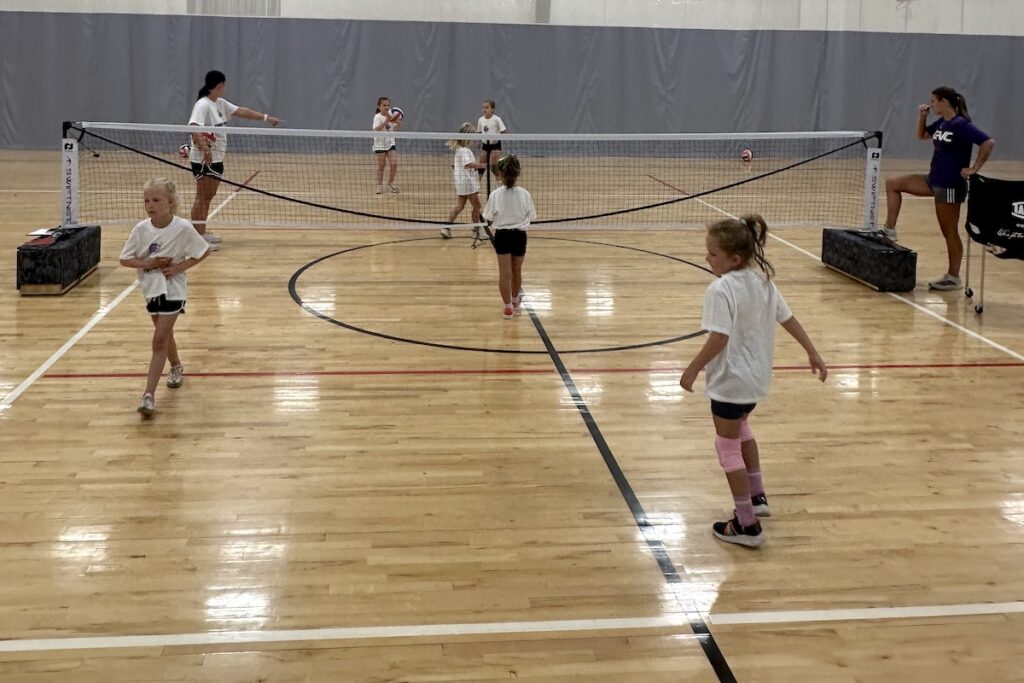
A major turning point came in January 2020, when the newly built Ronnie Grandison Sports Academy opened with eight indoor volleyball courts featuring wooden floors. The facility also offered basketball, and pickleball courts were added shortly after opening. Today, the facility has 18 lined pickleball courts, which have become an important part of OPVC’s youth development model.
The club recognized that the courts could provide a smaller playing environment for young volleyball players. With adjustments to net height and court setup, the space offered an opportunity to introduce fundamental skills and modified competition in a way that better suited younger athletes.
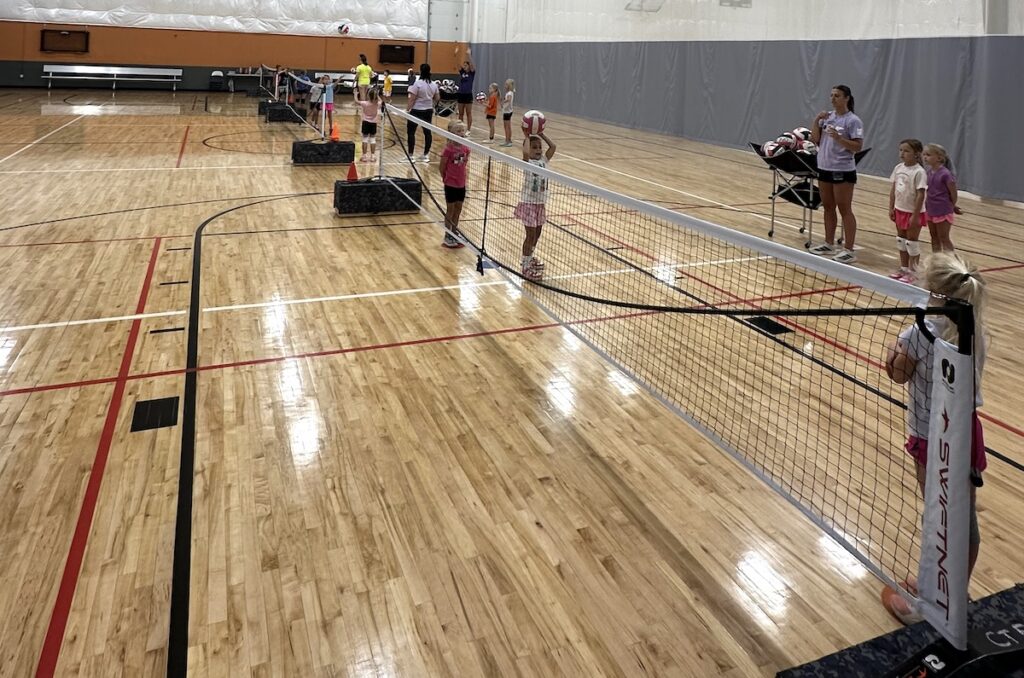
For Volleyball Beans participants from age three through kindergarten, the pickleball net remains at its standard height. For first- and second-grade Volley Sprouts athletes, OPVC uses a system to raise the net to a height appropriate for their age and ability.
The result is a training environment where young players can move, contact the ball, and begin to understand the game without being overwhelmed by a full-size court and adult-level demands.
OPVC has extended that approach to its L.E.A.P. youth league, where second- and third-grade athletes compete in a three-versus-three format. With fewer players on the court, each athlete has more opportunities to contact the ball, move into position, and experience the excitement of attacking over the net.
Hineline believes the format reflects a fundamental principle of youth development: the environment should help young athletes succeed while challenging them to improve.
“Young athletes don’t need a full-size court and a six-player team to learn the game,” Hineline said. “They need opportunities to touch the ball. They need to move. They need to experience success. And they need to have fun.”
A Dedicated Leader for Youth Development
Behind OPVC’s programming is Youth Program Director Zoe Kear, whose full-time role focuses on the development and continued growth of the club’s youngest athletes.
Kear’s responsibilities extend well beyond on-court instruction. She manages class registrations and staffing, communicates with local youth organizations and program coordinators, develops training opportunities, recruits and hires coaches, and trains staff on OPVC’s curriculum and coaching expectations. She also researches coaching methods and evaluates how the club can continue improving its approach.
During a typical week, Kear spends 1.5 to three hours on the court four evenings a week while also managing the administrative and developmental work that supports the program. During the summer, her focus shifts to camps and clinics, including planning, organization, staffing, and execution.
Having a dedicated Youth Program Director allows OPVC to maintain consistent standards and focus on the specific needs of younger athletes. It also gives the club a leader who can regularly evaluate what is being taught, how it is being taught, and whether the training environment is meeting the needs of the players.
That attention to curriculum and coaching helps ensure the youth program is not simply an introduction to volleyball, but the beginning of a developmental pathway.
A Year-Round Pathway for Growth
OPVC offers year-round youth programming to give new athletes an entry point into the sport while allowing returning players to continue developing their skills. Its structured curriculum helps families understand the progression from one class to the next, with each level building on previously introduced skills while remaining accessible to beginners.
For athletes who continue through the program, the goal is to develop the foundational skills, knowledge, and confidence needed for the next stage of volleyball, including the potential transition into club volleyball.
Registration typically peaks during the winter months, when many outdoor youth sports are out of season. However, OPVC emphasizes consistency throughout the year, recognizing that regular practice and repeated contacts with the ball help athletes develop and retain skills.
Year-round access also allows families to find opportunities that fit their schedules and gives young players a chance to discover volleyball outside the traditional club season.
Growing Boys’ Volleyball in Cincinnati
One of the most encouraging developments at OPVC has been the increase in boys’ participation. All of the club’s youth programs and skill classes are coed, giving boys and girls the opportunity to learn together from an early age.
OPVC is seeing boys join its youth classes as early as first grade. In its L.E.A.P. league, seven boys are participating this fall, and the club grouped them on one team so they could play together and compete against other boys.
The growth extends into pre-club programming. For the first time, OPVC introduced an all-boys pre-club team for second- and third-grade athletes. The club now has 28 boys participating in its youth pre-club programs.
Hineline sees the increasing availability of sanctioned boys’ volleyball at local high schools as an important factor in that momentum. As more boys have opportunities to watch older athletes compete and represent their schools, they can begin to see volleyball as a sport they can play throughout their school years.
For OPVC, introducing boys to the game early helps strengthen that pathway and creates more opportunities for the next generation of players.
Making the Game Age-Appropriate
At the center of OPVC’s youth philosophy is the belief that training and competition should reflect athletes’ physical and developmental needs. Rather than placing young players on a full-size court with six players per side, the club modifies the environment to encourage more involvement and meaningful learning.
Smaller courts, adjusted net heights, and three-versus-three competition give young athletes more chances to move, contact the ball, and participate in game-like situations. Coaches may introduce the ball from across the net to help players recognize and respond to realistic play patterns. For the youngest athletes, catching and tossing help introduce the concepts of three contacts before the program progresses toward more advanced skills.
The club also introduces jumping and attacking movements early, helping players establish habits they can build on as they grow. As athletes gain experience, the program gradually increases the demands of training and competition.
The approach reflects OPVC’s broader philosophy: more touches, more movement, and more opportunities for success can help young athletes stay engaged while developing the technical and tactical foundation for future play.
Ten Years of Growing the Game
From its first 11 girls’ teams to a growing community of girls’ and boys’ club athletes, Ohio Premier Volleyball Club has continued to expand its reach over the past decade. Its youth program remains an important part of that growth, connecting young players with the sport and creating a pathway for continued development.
With dedicated youth leadership, year-round programming, a structured curriculum, and innovative use of its facility, OPVC is working to make volleyball more accessible to younger athletes in the Cincinnati area.
As the club celebrates its 10th anniversary, its focus remains on helping children build skills, confidence, and a lasting connection to the game, one contact at a time.
Ohio Premier Volleyball Club, based in Cincinnati, Ohio, is a member of JVA, the only national association that’s 100% focused on junior volleyball and the needs of the club community. Our mission is simple: improve the junior volleyball experience. Founded in 2006 by Club Directors and for Club Directors, JVA supports over 1,800 member clubs with resources, events, education, and advocacy that help the sport grow in the right direction. With a focus on innovation and inclusivity, JVA empowers clubs to lead with purpose on and off the court, while also providing an unmatched event experience at JVA hosted tournaments. Learn more at www.jvavolleyball.org and follow @jvavolleyball on Instagram.