For many volleyball athletes, the love of the game begins on the court. For Tristan Clifton, it became something much bigger: a family tradition, a way to serve the sport, and an opportunity to continue growing as both a player and a leader.
Tristan was introduced to volleyball at a young age, beginning to play in elementary school before taking the next step in seventh grade when his mom encouraged him to try out for a club team. That decision opened the door to a new level of competition and eventually introduced him to another important part of the sport: officiating.
“By the end of that first club season, my mom asked if I had any interest in reffing,” Tristan shared. “I jumped on the opportunity.”
That opportunity became the start of a five-year officiating journey that has helped shape Tristan’s understanding of volleyball and strengthened his connection to the sport.
Officiating is already part of Tristan’s family history. As a third-generation volleyball official, he grew up surrounded by people who understood the importance of serving the game beyond playing. His experiences have allowed him to see volleyball from multiple perspectives: as an athlete, an official, and a member of the larger volleyball community.
When Tristan first stepped into the officiating role, he admitted there were nerves.
“I remember being incredibly nervous when I started,” he said. “But the other officials and tournament staff were always close by to support me.”
That encouragement helped Tristan gain confidence and develop into a knowledgeable official who now enjoys mentoring and connecting with athletes through the role.
While playing volleyball has always provided Tristan with the excitement of competition, officiating has given him a different appreciation for the game.
game.
“My favorite part about playing has always been the competition,” Tristan explained. “Developing new skills and getting to grow with my team has been a great experience.”
As an official, his favorite part is the opportunity to positively impact athletes.
“My favorite part about officiating is meeting new players and getting to be a part of their growth in the game,” he said. “Each tournament is a new set of teams that I get a small piece in impacting.”
Through officiating, Tristan has gained a deeper understanding of volleyball strategy, communication, and the rules of the game. That knowledge has even benefited him as a player.
“Reffing has helped me understand the game in a significantly different way than my teammates,” he shared. “I get to see how other teams utilize new strategies and implement them into my own routines.”
The experience has also given him confidence when competing.
“The understanding of the rules that I’ve developed over the past six years has reassured me when questioning calls and protesting as a player,” Tristan said. “Within the past school and club season, I was able to get almost a dozen calls overturned just using my knowledge of the rulebook.”
For Tristan, officiating has become a way to continue learning while contributing to the volleyball community.
One of his favorite events to officiate is the JVA World Challenge, where he has experienced firsthand the positive environment created for officials.
“JVA Worlds is one of, if not my favorite tournaments to officiate,” Tristan said. “The treatment of the referee staff is unparalleled by other events.”
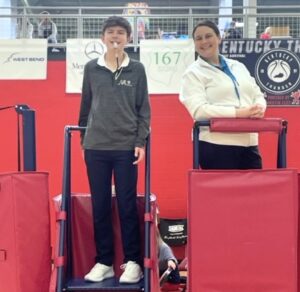
Beyond the competition itself, Tristan values the relationships he has built through officiating.
“There is such a great community within the officiating staff that I get to admire on and off the court,” he said. “Despite my age, I think I’ve been able to find genuine friendship and mentorship with many individuals in the community.”
Those connections have made tournaments even more meaningful, including opportunities to travel with family and share experiences with other officials.
While volleyball has been a major part of Tristan’s life, he has also excelled academically. He graduated high school as valedictorian and will continue his education at Georgetown University, balancing academics, athletics, and officiating throughout his journey.
For Tristan, time management and priorities were key.
“Academics always came first,” he said. “While my mom would be driving to weekend tournaments, I’d be in the passenger seat writing essays and taking exams.”
He even used tournament downtime as an opportunity to stay ahead.
“Last year, I utilized the time in between my matches to take practice ACT and AP Calculus tests,” Tristan shared. “Once my assignments were done, I got to shift my entire focus to reffing or playing.”
As Tristan begins his next chapter in college, his volleyball journey continues: not only as an athlete, but as an official and advocate for the growth of the sport.
His story is a reminder that there are many ways to be involved in volleyball. Officiating is not just about making calls; it is about learning the game, building relationships, developing leadership skills, and giving back to the sport that has given so much to its athletes.
For young volleyball players considering officiating, Tristan encourages them to take the opportunity.
Officiating may start as a way to stay connected to volleyball, but it can become a pathway to deeper understanding, confidence, mentorship, and a lifelong connection to the game.
JVA values the service Officials provide to junior volleyball. Individuals who are passionate about the game and interested in building a career in junior volleyball are encouraged to consider becoming a Certified Official.
Contact JVA Head Official Joseph O’Neal for more information.
Learn about JVA’s Officials Reward Program.